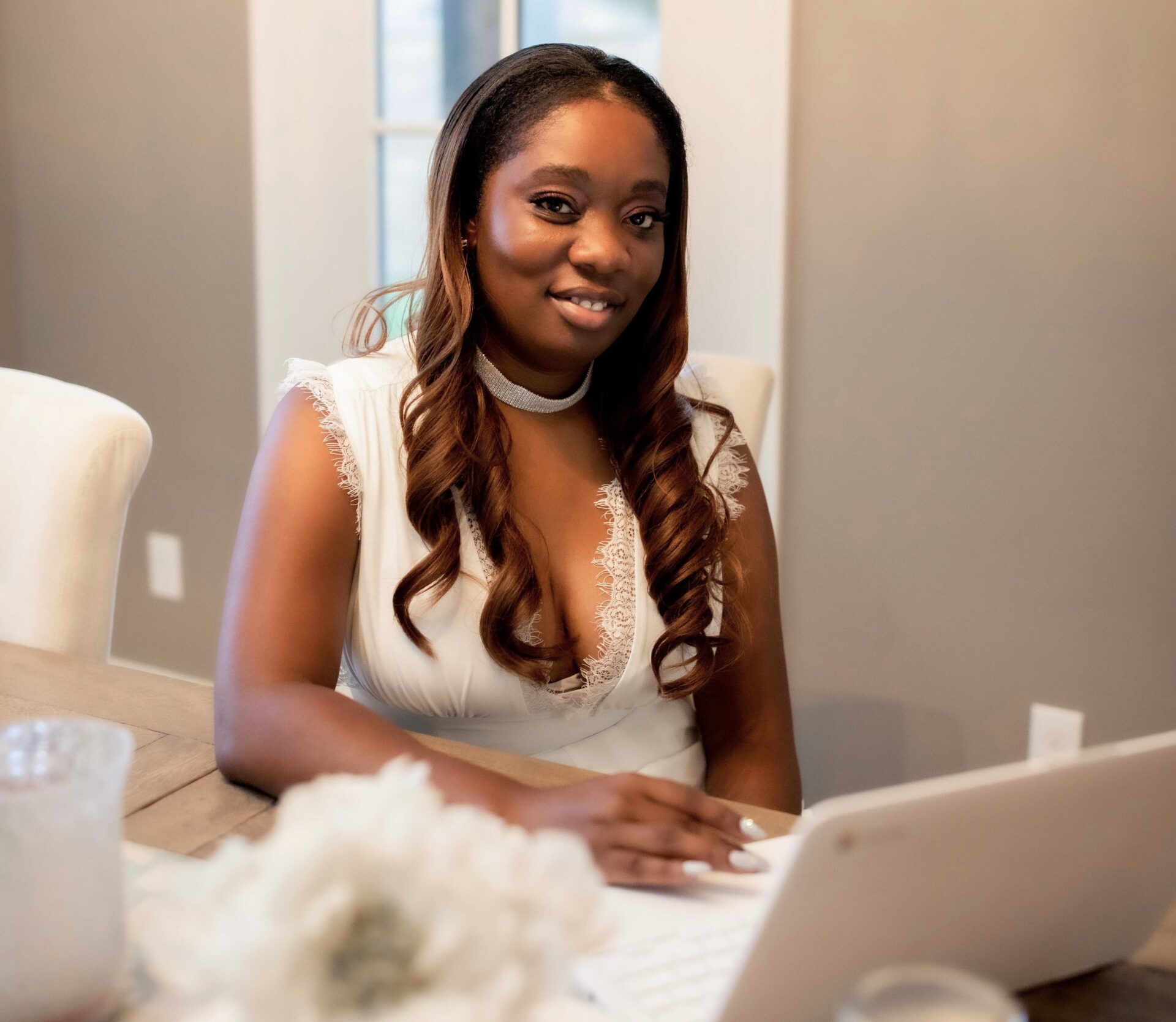
Black Woman Is the Leader of the No. 1 After-School Program in Texas


Today, 40% of teenagers are completely unprepared for college and the real world while 72% of teenagers want to start their own business. The one obstacle in their way, however, is a lack of knowledge about how to open a business. That is why Crystal Victoria launched an initiative to help students learn the fundamentals of entrepreneurship.

According to WeBuyBlack, Victoria is the founder of Teen Biz Camp, an after-school program for kids ages 13 to 18 that is active in four cities in Texas, including Dallas and Houston. The program, which runs eight weeks, consists of classes taught by a variety of local business owners and professionals. Students receive their very own business starter kit with a tablet and online store and get to know their community through field trips.

So far, Teen Biz Camp has trained 500 teens to become entrepreneurs. Even better is that after eight weeks, students already grow their finances.

Victoria created Teen Biz Camp to help teens go into the workforce with confidence because they are self-reliant. No longer will they have to depend on pensions or job security. Now that they are entrepreneurs, they are able to thrive in any career they decide to pursue. Victoria, an entrepreneur herself, clearly understands this need.

Teen Biz Camp recently launched a brand-new popup shop full of new inventory inside the upscale Galleria Mall in Houston, according to WeBuyBlack. With this pop-up shop, students have the opportunity to sell products in a fast-paced environment. Victoria’s goal for this shop is an economic impact of $360,000 to low-income communities.

Black Sculptor Builds Prosthetics for Amputees of Color

Black Sculptor Builds Prosthetics for Amputees of Color


Nigerian John Amanam, a 32-year-old former movie special effects expert and sculptor, has used his extensive experience and knowledge to create hyper-realistic prosthetic ears, nose, fingers, toes, and legs.

According to Shoppe Black, Amanam’s inspiration came after his cousin lost his fingers in an accident and summoned a desire to help him get them back. As he said, “I was thinking of ways to help him as a sculptor and thought to myself, ‘Since I’ve sculpted human beings, why can’t I mold something that can actually be used on a human body?’”

Not to mention, Amanam wanted to help others who had lost limbs similar to his cousin gain back what they had lost.

“They had this feeling of discomfort whenever they were around other people,” he said. “I saw it as a challenge. If I could give back or solve this need, it would go a long way to ease that emotional trauma and loss of confidence. I just want them to feel at home and be whole, aesthetically.”

In addition, Amanam wanted to make those prosthetics look realistic in terms of skin color. Most prosthetics in Nigeria are usually white or are unrealistic.

As Amanam states, “You rarely find people with black skin prosthetics. I want this need to be met within Africa. I want to reach out to blacks all over the world as well, by making this process accessible, at an affordable rate.”

Although Amanam’s products have been very well received by patients in need of prosthetics, he believes there’s always room improvement. He wants to open a prosthetics factory in his hometown of Akwa Ibom i to not only produce a large number of realistic prosthetics but to make them available internationally.

Ghanaian Teacher Teaches Microsoft Word to Students Using a Blackboard


Richard Appiah Akoto, a teacher from Ghana, garnered international praise for instructing his students on how to use Microsoft Word in a very unusual way—without utilizing a computer. Two years ago, images of him drawing screenshots of Microsoft Word on a blackboard in great detail went viral.

Teaching Word in this matter is, of course, tedious, but thanks to his innovative approach his students were able to fully learn how to use the software program. Eventually, Akoto’s method caught the attention of Microsoft, which then decided to help provide financial and technical support to the school, according to BlackBusiness.com.

“I wanted to teach them how to [use] Microsoft Word. But I had no computer to show them. I had to do my best,” he says. “So, I decided to draw what the screen looks like on the blackboard with chalk.” Akoto also said he had drawn monitors, system units, and keyboards.

Akoto has taught for about eight years at Betenase Municipal Assembly Junior High in Sekyedomase, Ghana. In 2018, he decided to post photos of his Microsoft Word sketches on Facebook.

Microsoft was so impressed with Akoto’s work that it invited him to participate at the 2018 Microsoft Educator Exchange in Singapore. It was the first time outside of Ghana for Akoto, who met education leaders from around the globe and shared his issues with the educational system in Ghana.

“I’d never travelled outside of Ghana, so the opportunity to interact with educators just like me from other parts of the world was incredibly inspiring,” he told Microsoft. “It was great to see how educators are using technology to teach their students beyond just the curriculum of their country. I was also inspired to learn how educators who experienced the same issues I did in terms of not having direct access to technology, overcame those challenges.”

Once Akoto went back to Ghana, the school had received a variety of donations of laptops, textbooks, and software from Microsoft. In addition, Microsoft donated an IT laboratory where the students can use actual computers to do their work. Akoto also participated in the Microsoft Certified Educator Programme, helping him to continue his passion for teaching.

Black NASCAR Driver Is the First With Autism

Black NASCAR Driver Is the First With Autism


Despite being only 19 years old, Armani Williams is already making history. Before he’s even old enough to drink, Williams is already a professional race car driver. Not only that, but he is officially the first NASCAR driver with autism.

Williams was born in Detroit and was diagnosed with autism spectrum disorder (ASD) at the age two. He was also considered non-verbal. So, when Williams expressed his dream of becoming a NASCAR driver, many people believed that his disorder would be a serious obstacle. One of the main symptoms of ASD is difficulty in focusing on and processing different tasks simultaneously, anticipated hindrances for Williams in the sport.

Although many of his family and friends didn’t believe he would make it, Williams constantly proved them wrong. According to BlackBusiness.com, when he was 8, Williams started participating in go-kart racing competitions before moving on to professional competitions. It wasn’t long before he was breaking records, becoming the black American to have the highest finish in a series race and the highest finish in the series championship in the ARCA Truck Pro Series.

Finally, in 2018, Williams was able to compete at the NASCAR K&N Pro Series in which he became NASCAR’s first openly autistic driver. From then on, he competed in prominent races in the United States and Canada. Williams now uses his success as a platform to spread awareness about the stigma and research surrounding autism. He also uses his platform to provide opportunities to people like himself who have autism and their families.

In addition to competing in NASCAR racing, Williams is also a motivational speaker, encouraging audiences to take action in their communities. Williams continues to spread awareness about autism and giving hope to those like him. He aims to inspire individuals with autism that the sky is truly the limit.

Terrica Lynn smith, black business owner, affordable housing, developer

Terrica Smith Went From Homeless To Building Affordable Housing

This Black female developer is living out her dreams


As a black woman in her mid-30s, Terrica Smith has cleared many hurdles to accomplish a number of major feats. She is the owner of Cachet Real Estate and a managing partner for Salt Capital Equity Group. Smith is also bringing her dream to life with the Madeline Cove project, a housing development that will provide 30 affordable homes, 60 townhouses, a 50-unit senior complex, and a retail building, according to The Acadiana Advocate.

The purpose of the project is to satisfy the housing needs of New Orleans’s north side. This project, backed by a local bank, already has a waiting list of more than 300 people. According to The Acadiana Advocate, the structure will include “the senior center, featuring 50 living units that will each be 500-600 square feet” and a “retail center, which will feature up to five spaces for light retail, a coffee shop or maybe a grocery store.”

Smith’s journey was a difficult one. She was a foster child who ended up aging out of the foster care system when she turned 16. Afterward, she was homeless on the streets of New Orleans.

“My mentor was being homeless,” Smith said. “It was the scariest moment of my life because people are pulling on you, trying to attack you. It’s not safe. You can’t sleep. I made a promise to my son under that bridge: As long as I had air in my lungs, I would never be homeless again.”

But Smith turned her life around, taking a leap of faith from living under the Claiborne overpass to visiting the White House, where along with other leaders and various business officials, she spoke about New Orleans’s progress with the project and Opportunity Zone program. 

RELATED CONTENT: Will Cyrus Is A Black Real Estate Developer Making His Mark In Dallas

Black Couple Owns Fastest-Growing Crab Pot Restaurant in the South


Mr. 3’s Crab Pot, a black-owned chain of seafood restaurants, is the fastest-growing crab pot restaurant chain in the South. What sets this restaurant apart is it uses seafood from local resources before combining that seafood with comfort food.

Not only that, but according to Blackbusiness.com, Mr. 3’s makes it a point to serve “underserved” communities, providing them with employment opportunities and teaching them financial independence.

The owners of Mr. 3’s Crab Pot, Rod and Rana Brown, have always strived to provide solutions through business. The Browns started their portfolio with real estate investment and renovation, becoming well-known in their community for offering affordable housing through their real estate.

Although they had success in real estate, the Browns desired to go into a business that would provide better financial security for their family. Because the Browns were foodies, they realized there was a severe lack of fresh seafood in low-income areas. That’s where Mr. 3’s Crab Pot comes in.

Mr. 3’s Crab Pot started as a mobile food trailer in the parking lot of a large retail store. The couple’s family recipes became a huge hit with customers.

It didn’t take long for Mr. 3’s Crab Pot to become more than a food trailer. The Browns soon bought an abandoned building and transformed it into their first brick-and-mortar location in Rana’s childhood neighborhood of Thomasboro, NC. The restaurant became well-known for its amazing cuisine and warm customer service.

The Browns go beyond providing delicious food; they provide their community with jobs as well as extensive knowledge in business management, real estate, and ownership. The Browns aren’t just owners of this fast-growing chain, but they are true inspirations for their community.

Black Entrepreneur Opens Detroit Luxury Beauty Salon After Receiving $596K In Funding


Katrina Wilson’s passion has always been to help people look their most glorious through the complex art of hairstyling. The Detroit native is now able to successfully achieve that dream thanks to being granted $596,000.

Katrina is launching her own beauty salon called Creme Brulee. What sets this salon apart from all the other salons in downtown Detroit, is the fact that it is not only multicultural but luxurious.

According to BlackBusiness.com, Katrina’s background includes growing up in a family that often struggled financially. As a result, Katrina began working as a hair stylist at only 13 years old in order to help her family with money. When she was 16, she earned her Cosmetology license and has been working with a variety of VIPs as a “platform artist and celebrity stylist,” according to BlackBusiness.com.

But it was when she got an endorsement from the industry’s #1 brand, Paul Mitchell, that her career blew up. Katrina wanted to go a step further and open her very own salon. She decided that she wanted to create a luxurious salon where her clients can be treated like celebrities no matter their race and background.

Once she made her choice to own her salon, Katrina was given $170,000 from organizations such as the Space Award from the Motor City Match Program which according to BlackBusiness.com, “helps entrepreneurs from Detroit find a location and build their space.” Katrina was also given $426,000 in microloans. All funding is now being used to renovate the space she has rented for her salon.

Creme Brulee will have its grand opening this year in downtown Detroit. The salon will be the first and only multicultural, celebrity beauty salon in the area that caters to all hair textures and ethnicities, setting it apart from all the rest in Detroit.

Meet the Black Couple who Owns New York City’s First Black-Owned Sports Team

Meet the Black Couple who Owns New York City’s First Black-Owned Sports Team


Brooklyn natives Corey and Tamara Galloway dreamt of owning a professional sports team in New York City. And they made that dream come true while making history as the owners of the National Arena League’s New York Streets—a franchise football team. The Galloway’s are now a part of a small group of African Americans who own their own professional sports team.

According to BlackBusiness.com, Corey Galloway is also the founder of a New York-based business development and direct investment company Legacy Growth Partners. He is also an avid football fan who travels all over to attend games and football practices.

Attending games regularly inspired Corey to seek ways that he could be more involved in the business side of the sports industry.

Being a black American, the Galloways experienced a number of problems while developing New York Streets due to the severe lack of representation in the industry as well as people doubting them. People even asked where their money came from. However, these negative experiences didn’t discourage the Galloways. In fact, they hope to pave the way for more black Americans to own sports teams.

“For me, as a football fan, as a football player, I acknowledge that there is a barrier of entry that’s created with ticket pricing. Not everyone is able to really enjoy the game and see the games live and upfront. So, creating that opportunity and being able to provide them with an option to see a game live—I’m just excited that those kids will be able to enthusiastically say ‘Oh, wow! I’m going to a game!’” Corey told Black Business News.

The Galloway’s have the support of colleagues and friends including football player Devale Ellis. Last year, the New York Streets played their first game at Westchester County Center in White Plains, New York.


Atlanta International Airport Opens its First Black-Owned Barbershop

Atlanta International Airport Opens its First Black-Owned Barbershop


Hartsfield-Jackson International Airport’s first barbershop and salon recently opened in the domestic terminal. But what makes this grand opening even better is that the shop is black-owned. The Barber Shop Atlanta’s owner, Roosevelt Gilbert, is the very first black entrepreneur to own a barbershop inside Hartsfield-Jackson International Airport.

This isn’t Gilbert’s first barbershop. In fact, he’s been in the business for more than 10 years. His first barbershop is located at North DeKalb Mall in Decatur, Georgia, and is well known in the area.

What’s impressive about the Barber Shop Atlanta is its historic place in America’s busiest airport. According to BlackBusiness.com, Hartsfield-Jackson International Airport serves a little more than 100 million passengers each year and since 2009, it has been wanting to open a black-owned hair salon and/or barbershop. Unfortunately, this plan never seemed to see the light of day and according to BlackBusiness.com, it really didn’t “work out for other operators.” That is until Gilbert’s barbershop was chosen out of four other applicants who applied to open their own shops in the airport in 2014.

As Gilbert said during an interview with The anta Journal-Constitution, “I’m just glad to be open. We had to go through a lot.”

Indeed, the journey to this barbershop was a difficult one. It took more than five years of delayed and complicated planning and construction for The Barber Shop Atlanta to finally open. There were challenges to building in a working airport, specific restroom requirements had to be met, and construction could only be done at night.

The Barber Shop Atlanta is located in the North Terminal Atrium next to TGI Fridays and is open 17 hours a day according to BlackBusiness.com. The barbershop has 12 seats and a VIP Suite, according to the Atlanta Journal-Constitution, and offers a large variety of services such as both men’s and women’s haircuts, shaves, styling, perms, facials, and even massages.

This Former Homeless Mom Now Owns Her Own Restaurant


Being a single, expecting mother is difficult enough, but being single and pregnant without a home would be just unimaginable to many. However, one woman has gone through the experience and came out victorious. Five years ago, Brooke Coleman was single, pregnant, and homeless.

As Coleman stated, “I was going through a struggle. One night I looked at my family and decided I was never going to be in that situation again. I knew if I worked hard, I would never have to go back to that shelter.”

However, Coleman refused to give up and feel hopeless since she still had a dream and wanted nothing more than to accomplish it. Coleman first decided to attend a culinary arts program at Sinclair Community College. Once she completed the program, she decided to create a small catering service that eventually gained her the nickname “Chef B.”

It wasn’t very long before Coleman took the plunge and took the once-in-a-lifetime opportunity to open her own restaurant. She decided to name her restaurant Stuffed Enuff because most, if not all, of the items on the menu “can be stuffed with a variety of ingredients,” according to BlackBusiness.com. Some of the recipes include stuffed meat, stuffed rolls, and stuffed burgers. Even better is that customers can customize their very own choice of stuffing.

Stuffed Enuff offers chicken wings along with eight dips. They added in a soul food menu that can be an all-you-can-eat buffet or take-out every Sunday. As a result, her customers enjoy the sheer variety of excellent food and great customer service.

As Coleman stated, “I knew I wanted to do something different from what any other restaurant was doing.”