Now That Affirmation Action Is Dead, Black Folks ‘Need HBCUs More Than Ever’


In the wake of the June 29 Supreme Court ruling, which effectively prohibits the consideration of race in higher education admissions, it is not surprising that a tide of dissent has emerged. President Biden, expressing his deep disappointment, characterized the 6-3 decision as a profound setback.

Numerous observers have remarked upon the ruling’s adverse impact on diversity within higher education institutions nationwide, as well as its regrettable imposition of barriers upon numerous deserving students aspiring for higher learning. Across the country, universities and colleges find themselves reassessing their admissions processes, while some continue to affirm their commitment to holistic assessments of applicants in their admission decisions.

Amidst the justified outrage and widespread critique, it is crucial to recognize that the SCOTUS ruling signifies a pivotal juncture with far-reaching implications for historically Black colleges and universities. These esteemed institutions have long borne witness to the inhospitable reception faced by Black students in predominantly white colleges and universities (PWIs), regardless of their exceptional qualifications.

As this pivotal moment unfolds, it is noteworthy that former President Donald Trump, a self-proclaimed genius and ever the self-congratulatory champion of conservative policies, couldn’t resist patting himself on the back for his role in stacking the court with conservative justices, while also celebrating the SCOTUS ruling.

With his typical lack of subtlety he said, “This week, those justices ruled to move our country forward with a merit-based system of education. If you’re a worker and you work very hard in school, you got fantastic marks, somebody that hasn’t done nearly as well who perhaps has not worked nearly as hard will not be taking your place.”

The implication behind the phrase “taking your place” is none other than a thinly veiled reference to individuals from the Black community. Do opponents of affirmative action possess some sort of mystical ability to discern the qualifications of Black students based solely on their skin color? Do they have a secret blackness radar that magically detects inadequacy?

But let’s not forget, Trump is the same man who shamelessly peddled falsehoods about his own educational achievements, so forgive me if I’m not entirely convinced by his sudden commitment to academic integrity and merit. But let’s not dwell on the past fabrications of that “genius.” Instead, let’s address how this ruling presents a remarkable opportunity for HBCUs to swagger into a new and transformative future if they play their cards right.
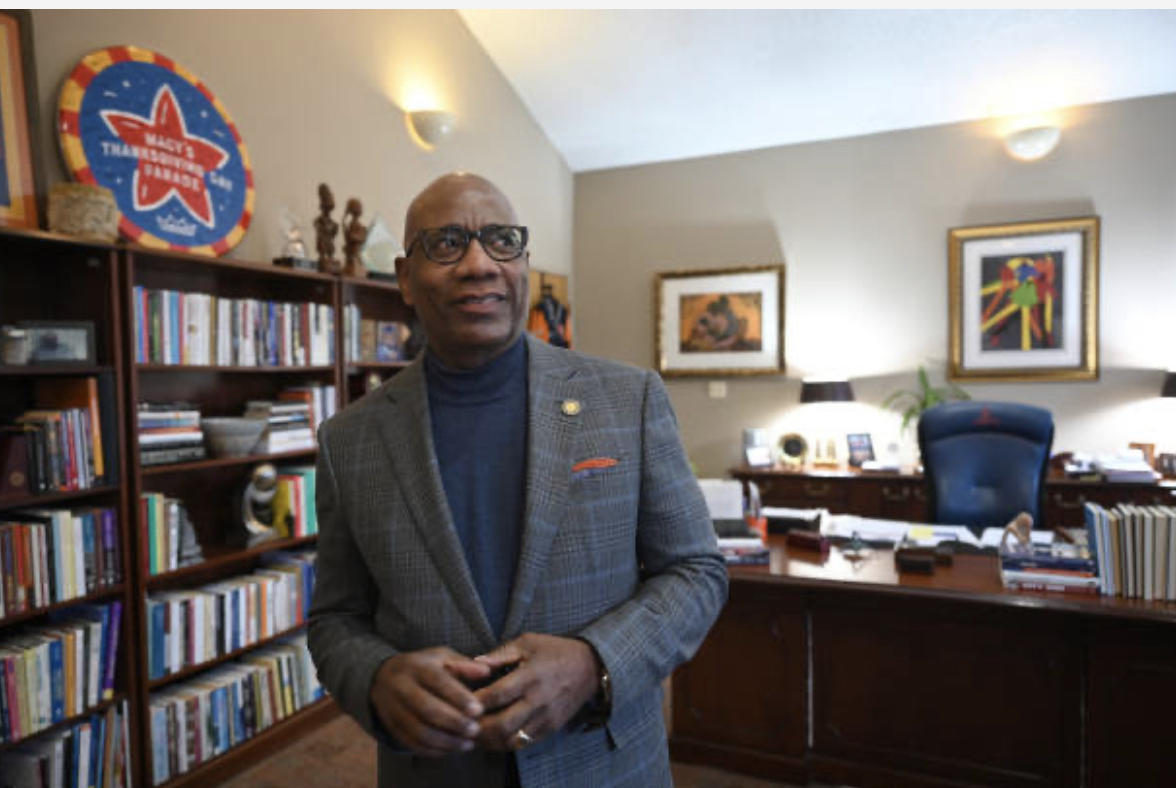
David K. Wilson, Morgan State University, Affirmative Action
GETTY/David K. Wilson


Following the court’s decision, several HBCU presidents expressed concern. Morgan State University’s president, David K
. Wilson, stated that the ruling would undermine decades of progress, disregarding the value of diverse backgrounds in enriching the academic environment.

“By eliminating one’s ethnicity or racial background as a consideration in admissions decisions, the U.S. Supreme Court has, in many regards, turned its back on the inherent value of unique experiences and perspectives that students from diverse backgrounds bring to the academic environment, enriching the educational experience for all students, Wilson said in a written statement.


Tony Allen, Delaware, HBCU
FAIR USE | TWITTER TONY ALLEN

Delaware State University’s president, Tony Allen, described the decision as having a chilling effect on college matriculation for people of color, and being harmful to society.

Howard University’s communication office stated that the ruling would have a devastating impact on diversity in higher education, limiting access for students of color and hindering their preparation to contribute to society.


Helene Gayle, Spelman HBCU
NEWARK, NJ – MARCH 28: Dr. Helene Gayle attends the BET’s ‘Black Girls Rock!’ Red Carpet at NJ Performing Arts Center on March 28, 2015 in Newark, New Jersey. (Photo by Gilbert Carrasquillo/FilmMagic)


Spelman College’s president, Helene Gayle,
expressed deep disappointment, emphasizing the reversal of progress, the loss of equal access, and the importance of diversity for democracy.

This ruling reverses generations of progress that opened the doors for Black and brown communities to have equal access to higher education at institutions of their choice. It also goes against the growing diversity of our nation and the importance of diversity for our democracy, she said.


David Thomas, Morehouse HBCU
ATLANTA, GEORGIA – FEBRUARY 18: David A. Thomas, Morehouse College President, speaks onstage during the 35th Annual “A Candle In The Dark” Gala at Hyatt Regency Atlanta on February 18, 2023 in Atlanta, Georgia. (Photo by Paras Griffin/Getty Images)


Morehouse College’s president, David Thomas, called the decision a
travesty with potentially enduring negative effects, including a significant reduction in the black student population at elite colleges.The estimate at some elite colleges is that the impact of this decision will reduce the black population, student population, by 40%,” Thomas said in an interview with a local television station in Atlanta.

While Thomas expressed concern over the potential enduring, negative effects of the decision, including a significant reduction in the Black student population at elite colleges, it is important to acknowledge the contrasting admissions practices between HBCUs and PWIs.

Unlike PWIs, HBCUs have traditionally not considered race as a factor in admissions. However, it is important to recognize the historical context in which HBCUs faced pressure to enroll more white students after desegregation legislation. The threat of severe sanctions, such as closure or merging with PWIs, compelled HBCUs to increase their white student enrollments. Over the past few decades, the number of white students on Black college campuses has continued to trend upward

Data from the National Center for Education Statistics shows that the number of white students in HBCUs grew from around 20,000 in 1976 to approximately 34,000 by 2001, reflecting a 60% increase. It is worth noting that two HBCUs, Lincoln University in Missouri and Bluefield State University in West Virginia, currently have a higher number of white students enrolled compared to black students.

In the case of public HBCUs, the recruitment of non-Black students becomes necessary to maintain accreditation and secure government funding. These institutions actively seek students from predominantly white and Latinx high schools to meet racial diversity standards. Consequently, public HBCUs tend to have a higher proportion of non-Black students, compared to private HBCUs. It is noteworthy that discussions and debates regarding this form of affirmative action, which benefits white students attending HBCUs due to proximity and financial feasibility, are not as prevalent.


Micheal Lomax
ATLANTA, GEORGIA – DECEMBER 18: Dr. Michael Lomax, Ph.D., President & CEO, United Negro College Fund (UNCF) attends 38th Annual Atlanta UNCF Mayor’s Masked Ball at Atlanta Marriott Marquis on December 18, 2021 in Atlanta, Georgia. (Photo by Paras Griffin/Getty Images)


In response to the SCOTUS ruling, Michael Lomax, the
president, and CEO of the United Negro College Fund (UNCF), expressed concern that it would limit educational opportunities for Black students and students of color at PWIs. He anticipated that this limitation would result in a surge in demand for HBCUs. Despite the challenging circumstances, Lomax adopted a more optimistic perspective, viewing this as an opportunity.

In a statement posted on the organization’s website, Lomax remarked, “The Supreme Court ruling will close the door to educational opportunity for many Black students and students of color who want to attend non-HBCUs.” He acknowledged that, because of the ruling, more students would likely turn to HBCUs for their college education. Lomax also expressed confidence that HBCUs would make every effort to meet the increased demand from students. He emphasized the significance of HBCUs, stating, “America needs HBCUs now more than ever.”

Lomax is correct.  

The SCOTUS decision is likely to result in even more declines in racial diversity among many postsecondary institutions, leading to talented students of color seeking alternatives. In 1996, the residents of California decided to prohibit affirmative action policies based on race in public universities within the state. Following suit, eight additional states – Arizona, Florida, Idaho, Michigan, Nebraska, New Hampshire, Oklahoma, and Washington – adopted similar measures by prohibiting race-based considerations, often through ballot initiatives that received approval from the states’ voters. Consequently, several universities in these states have encountered significant challenges in their pursuit of achieving racial diversity on their campuses due to these bans.

HBCUs can help fill this gap, but as Lomax and others have argued, these institutions require greater investment. Currently, HBCU endowments pale in comparison to those of PWIs, and federal research and development grants awarded to HBCUs are minimal.  

A recent report from the Brookings Institute revealed a stark disparity between the endowments of the 10 largest HBCUs and predominantly white institutions in 2020. The top 10 HBCU endowments were found to be 100 times smaller than those of their predominantly white counterparts. Even when combining the total endowments of all HBCUs in the country, which amounted to approximately $3.9 billion in 2019, it was still less than the endowment of New York University alone ($4.2 billion).

The authors of the Brookings report also reported that HBCUs receive less than 1% of federal research and development grants, which leads to a lack of resources for both students and faculty. The report also stated that given the anticipated increase in demand for HBCUs following the SCOTUS decision, it is crucial for states, corporations, philanthropies, and individuals to reevaluate their investments in these institutions. As mentioned in the report, HBCUs require regular access to investment capital from various sources, including traditional banks, community development financial institutions (CDFIs), philanthropy, and other trusted, mission-driven partners. Such investment would enable long-term planning for institutional development and expansion.

To maximize their impact, HBCUs need to be having discussions about how to generate revenue through community and economic development activities to strengthen their financial standing in their surrounding communities. The Brookings report suggested that revenue generated from land and property acquisition, as well as the commercialization of research, patents, and entrepreneurial activities, can bolster endowments and be reinvested in students and faculty. The increased student demand also means that these institutions must solve the chronic housing shortages on campuses, invest in hiring more faculty, expand course options, and enhance campus security.

HBCUs have undoubtedly played a pivotal role in shaping and nurturing the Black middle class. To continue their legacy of empowerment, these institutions must prioritize the development and enhancement of programs that address pressing issues such as climate change in urban communities and the shortage of Black professionals in fields including medicine, law, psychology, science, journalism, and more. By cultivating a diverse range of professionals, HBCUs can contribute to the elimination of persistent disparities that manifest in various aspects of health and wealth.

In addition, HBCUs should forge strong partnerships with K-12 educational institutions to tackle systemic barriers that hinder students’ access to higher education. By addressing challenges like underfunded schools, housing discrimination, food insecurity, and income inequality, HBCUs can ensure that even the most talented students can pursue and attain higher education. It is through these collaborative efforts that HBCUs can continue to uplift their communities and drive positive social change.

In recent years, there has been a notable increase in enrollment at HBCUs as more Black prospective students and their families are choosing these institutions. While the overall number of Black students in higher education decreased during the pandemic, HBCUs have experienced a surge in applications from those who decided to pursue college. This trend can be attributed to a heightened awareness of racial justice issues, particularly during the Black Lives Matter movement. Students have expressed a desire to attend HBCUs, recognizing them as safe spaces where they can feel a sense of belonging and fully enjoy their college experience.

Parents seek institutions where their children can be protected and feel safe while acquiring knowledge and personal growth for a successful future. Black students have taken note of the message that they may not be fully welcomed at predominantly white institutions. Many are asking: Why continue to pursue validation and acceptance from predominantly white institutions if they fail to create a welcoming and safe environment for Black students?

In contrast, HBCUs provide an environment where Black students don’t have to worry about their sense of belonging or encountering a cold reception. These institutions offer a supportive and inclusive community for Black students, fostering an atmosphere conducive to their academic and personal development.

As predominantly white schools continue to grapple with ongoing challenges in achieving campus diversity, HBCUs stand at a pivotal moment, where they can seize a transformative opportunity. By taking the lead, HBCUs have the potential to shape a more equitable and diverse future in higher education and beyond.

RELATED CONTENTStudent Scholarships Targeted By Republican Politicians After Affirmative Action Ruling


Stacey Patton is an award-winning journalist and the author of Spare the Kids: Why Whupping Children Won’t Save Black America.
Banking On Self-Reliance: A History Of Black Banks From 1930-Present

Banking On Self-Reliance: A History Of Black Banks From 1930-Present


Banking on Self-Reliance” continues … with Black bankers and communities pushing forward in their quest for financial freedom after the Freedman’s Savings Bank folded. Get into the history of Black banks from 1930 to the present:

“Solid as the ‘Rock of Gibraltar’”

freedman's Bank
FAIR USE/INSTAGRAM

The resilience of the Black banking enterprise remained unbroken even in the face of the Freedman’s Bank’s failure and the Panic of 1873, which was felt for several years and contributed to the Long Depression, a period of economic stagnation in the United States and other parts of the world. Between 1882 and the Great Depression, there was a remarkable surge in the establishment and growth of Black banks in America.

In a climate where white-owned institutions withheld credit and capital from Black businesses, it was the Black churches, mutual aid societies, and fraternal organizations that emerged as the bedrock of Black communities, much as they had been for free Blacks in the North during the pre-Civil War era.

Utilizing assets such as real estate, buildings, and Sunday offerings, the churches not only fostered wealth for their own ministries, including schools, but also channeled capital into Black-owned banks, insurance companies, newspapers, and various other business ventures. This collective effort catered to the needs of Black communities and contributed to the flourishing of a vibrant economy. The first generation of Black bankers worked hard to demonstrate their incalculable worth to their communities.

“It has often been stated that not many depositors have suffered from the failing of a Negro bank in the United States,” The Nashville Globe reported in 1910 as it reflected on the fallout over the Freedman’s Bank. “Thus this first failure right in the door of the nation’s capital has served to strengthen the confidence as well as to educate the Negro in the financial world.”

The paper also noted, out of the scores of failures reported by the press during the Banker’s Panic of 1907, “not one was chalked up against the Negro Bank. Their annual statements, instead of showing a decrease in clearance, showed an increase.” Black banks were as “solid as the ‘Rock of Gibraltar.’”

Black banks emerged as a formidable presence in numerous thriving cities.

During the first decade of the 20th century, over 60 prosperous Black banks dotted the urban landscape of the South. Like ethereal mushrooms, these institutions seemed to sprout overnight, garnering attention from newspapers of all shades, whether Black or white. Maryland, Virginia, North Carolina, Georgia, Florida, Alabama, and Mississippi stood as the very backbone and sinew of the Black banking industry, with Virginia boasting an impressive 13 banks and Mississippi with 11. The Nashville Globe, in 1909, revealed that Mississippi’s Blank banks had witnessed a staggering increase in total assets, soaring from $50,000 in 1904 to an impressive $750,000 by 1908.

In their nascent days, these early Black banks bore names that evoked purpose and resilience: One Cent Savings Bank in Nashville, Solvent Savings in Memphis, People’s Investment in Birmingham, The Sons and Daughters of Peace, Penny,

Nickel and Dime Savings in Newport News, and the Star of Zion Banking and Loans Association in Salem, Virginia.

Banking and insurance, long revered as the pinnacle of business pursuits, have always commanded utmost diligence and financial acumen. As such, prevailing notions of Black intellectual inferiority and unfounded associations with criminality denied Black people the chance to acquire financial knowledge within the domain of white establishments. White banks limited the prospect of Black individuals to menial roles as janitors while withholding their patronage. In stark contrast, within the realm of Black banking institutions, the spectrum of stockholders spanned from tender two-year-old children to seasoned elders, fostering a remarkable inclusivity, and embracing the wisdom and aspirations of all generations.

From The Denver Star, May 1914: “How he has succeeded in mastering the banking and insurance businesses without opportunities to learn is almost a great wonder . . . That he has learned the banking and insurance businesses, has developed them, and is now conducting these branches of business with success constitutes one of the best possible answers to the statements by anti-race men that the Negro is an inferior race.”

During this era, a constellation of pioneering Black banks graced the financial landscape. Notable among them was the Capital Savings Bank, established in 1888 in the heart of Washington, D.C. It stood as a testament to Black excellence, being the first bank conceived and operated by African Americans. Within four years of opening, the bank’s deposits burgeoned to surpass the remarkable sum of $300,000.

That same year, the True Reformers Bank of Richmond was established under the visionary leadership of Rev. William Washington Browne, a former slave and Union Army officer from Georgia. Born from the inspiration of the Grand Fountain United Order of True Reformers, a revered Black fraternal organization founded by Browne, this financial institution emerged as a response to an arduous challenge.

The initial intent had been to establish a local branch of the fraternal organization in Virginia, and its savings were entrusted to the care of a white storekeeper. But the scourge of racial tensions, stoked by a lynching in Charlotte County, aroused suspicions among local whites regarding the organization’s intentions with the funds. Determined to safeguard their finances from white scrutiny, Browne made

the pivotal decision to open a bank catering exclusively to Black clientele in Richmond. The bank flourished and expanded its reach across more than 20 states, an enduring testament to its legacy.

In 1889, the Mutual Bank and Trust Company of Chattanooga took its place among these venerated institutions, followed shortly thereafter by the establishment of the Alabama Penny Savings Bank of Birmingham in 1890. Another notable addition to this illustrious roster was the North Carolina Mutual Life Insurance Company, which found its footing in 1898 and swiftly amassed a remarkable quarter of a million dollars in revenue by 1910. Today, it proudly stands as one of the oldest and most distinguished Black-owned insurance companies in the United States.

The Mutual Bank and Trust Company of Chattanooga was established in 1889, followed by the Alabama Penny Savings Bank of Birmingham in 1890. Drawing inspiration from the biblical tale of the virtuous servant who returned with ten talents after being entrusted with five, William Rueben Pettiford established the Alabama Penny Savings Bank. When he established his bank, incredulous white men did not regard it as serious enough to last and many Black folks regarded it with distrust. By 1914, his magnificent building at 310 18th Street North was the home of over $500,000 in resources and regular annual dividends paid, attesting to its wise and prudent management. Inspired by the success of this bank, others sprung into existence in other states.

The North Carolina Mutual Life Insurance Company, which was established in 1898, grossed a quarter of a million dollars by 1910 and stood as one of the oldest and most prominent Black-owned insurance companies in the US until 2022 when it came to an end.

The year 1900 bore witness to the founding of The National Negro Business League by the visionary Booker T. Washington. It 1966, it would be reborn as The National Business League, leaving an indelible mark on the landscape of Black entrepreneurship. This influential league provided unwavering support to Black visionaries, nurturing the growth and prosperity of their enterprises. Its impact resonated across the nation, with an impressive network of 600 chapters established throughout the United States.

“The Negro Yearbook,” a diligent chronicler of Black banks, revealed a captivating glimpse into their ascendancy. By 1912, 64 Black banks were thriving, collectively doing annual business of about $20 million as these institutions

increasingly earned community trust. Meanwhile, the National Negro Bankers Association, established in 1924 by Richard Wright, Sr. and Charles C. Spaulding, held annual meetings of Black bankers to discuss cooperation and to exchange information on how to foster cooperation between Black business and banks.

The Colorado Statesman newspaper said, “The Negro banker is about the safest banker on earth. He knows that strong forces are against him, not because he’s a Negro, but because he is a competitor in the sanctum sanctorum of modern power; he knows, too, that the world is watching him and that he has to depend for business on a people many of whom would rather for their money to gown in the crash of a white bank than to be safe in a Negro bank. In other words, the negro banker has more to gain by being straight and more to lose by crookedness than any other class of bankers in the world.”


“Let us put our moneys together.”

Black Bankers, Black banking, Juneteenth, finance, freedman’s bank
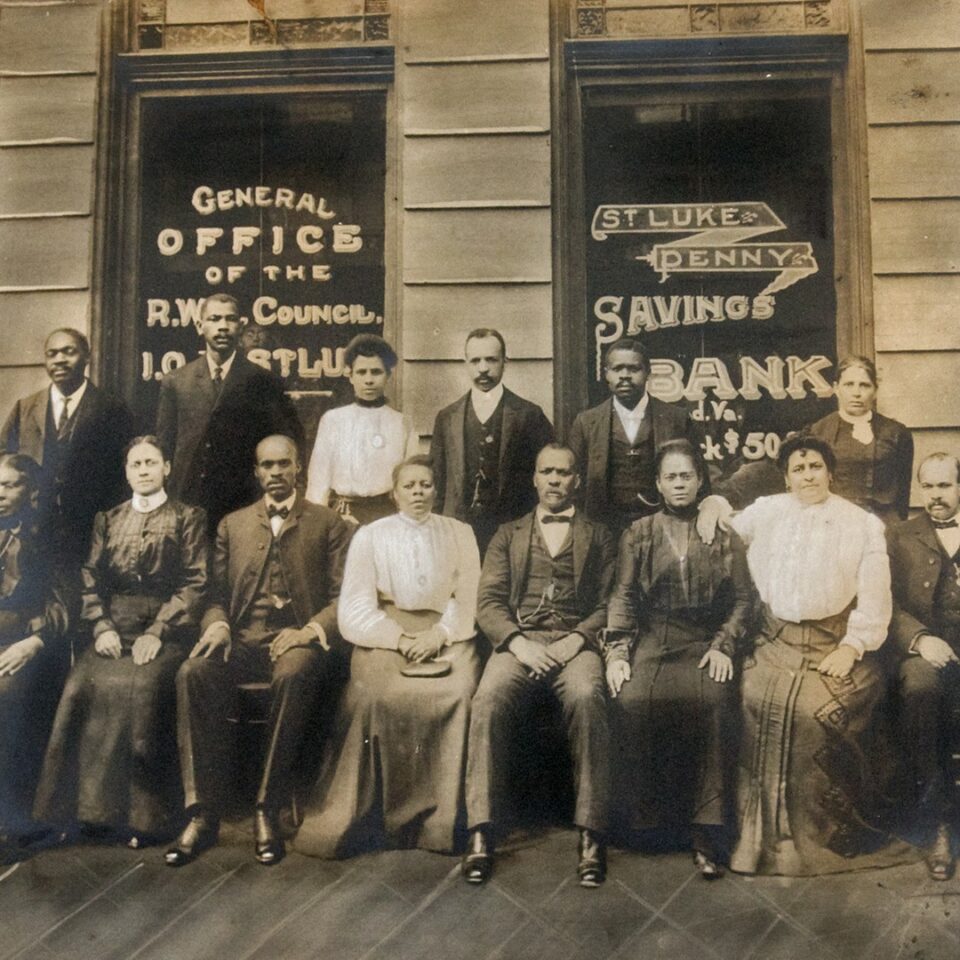
FRAMED PHOTOGRAPH OF MAGGIE WALKER AND STAFFS OF IO OF ST LUKE AND ST LUKE PENNY SAVINGS BANK .

The early decades of the 20th century embodied a period of experimentation and a “golden era of Black banking.” Within the pages of Black newspapers, resounded the resolute calls for a Negro Banking Directory, a symbol of unity that aimed to retain Black wealth within Black institutions and communities. These newspapers urged Black banks to join hands with the media, weaving a tapestry of advertisement to showcase their invaluable services within Black communities.

From The Nashville Globe: “The Negro is handling many thousands of dollars monthly that could be passed through Negro banks in their various communities. They are handling hundreds and thousands of dollars annually that go through post office money orders and by registered mail that could easily be transferred by exchange checks from Negro banks if the public knew that such institutions were in existence and were doing a general banking business.”

In a 1910 interview with The Colorado Statesman, Rev. Pettiford, the president of the Alabama Penny Savings Bank of Birmingham, said that “the greatest problem of the banking institutions conducted by the race was to educate our people to know the purpose and appreciate the value of these institutions.”

Collaboration was deemed indispensable for all Black individuals involved in the field of banking, as emphasized by early leaders. As the Great Depression loomed closer, the urgency of these calls for unity grew louder. Richard Wright, Sr. foresaw that without such a collective alliance, the Black banking sector would struggle to rebound from the impending financial devastation.

“We must unite all the Negro banks in the country to restore confidence in our business. No bank can stand alone,” Wright wrote in 1932.

In the captivating history of Black banking, where the narratives of Black men have often taken center stage, the vital contributions of Black women emerge as a beacon of empowerment, resilience, and defiance against racial and gender discrimination.

One notable figure in this history is Maggie Lena Walker, who became the first female bank president. In 1903, she founded the St. Luke Penny Savings Bank in Richmond, Virginia.

With a resounding call to action, Walker urged, “Let us use our moneys; let us put our moneys out at usury among ourselves and reap the benefit ourselves. Let us have a bank that will take the nickels and turn them into dollars.”

Eliza Allen, a former slave, co-founded the True Reformers Bank in Richmond. Her remarkable leadership extended to creating secret societies of enslaved women, providing vital mutual aid. She holds the distinction of being the sole woman named on the charter of the first Black-owned bank in the United States, the True Reformers Savings Bank.

Mabel Z. Mollison was the first African American female cashier of the Lincoln Savings Bank in Vicksburg, Mississippi, from 1892 to 1908, where she was responsible for all the bank’s financial transactions and served as its public spokesperson.

The Nashville Globe lauded Walker’s astuteness, portraying her as a formidable force capable of navigating any challenge that might arise. Walker “has proven by her wise manipulations in the money market to be equal to any and every emergency that should or could arrive.” Meanwhile, it described Mollison the “moving spirit” in the Lincoln Savings Bank, a testament to her influential role in shaping its success.

Lillian H. Payne, dubbed “the Banker’s Banker,” co-founded the People’s Savings Bank in Kansas City in 1904 and helped it become one of the largest Black-owned banks in the country at that time.

The Depression of the 1930s and its painful global economic impact hindered the progress of many Black banks and led to the closure of several institutions. However, this period of adversity proved to be a transformative moment for Black businesses, as they gleaned a crucial lesson: the importance of financial strategies such as mergers, cost reduction, cooperative collaboration, resource pooling and more scientific management practices.


“Deposit your money in a Black bank”

Black Panther
A mutual aid program set up to support veteran Black Panther Party members recently announced it raised nearly $5,000 over the past two months. (Image: Twitter/@Pateron)


Calls to entrust wealth to Black banks echoed during the transformative era of the Great Migration when millions of Black people left the South in search of better lives in cities of the North and Midwest. It was in these urban landscapes where racial barriers enforced by white-dominated financial institutions propelled Black banks to the forefront, catering to an expansive market of migrants seeking avenues to acquire homes and establish enterprises.

Fast forward to the resounding voices of the 1960s and 1970s, when the Civil Rights movement spurred an impassioned rallying cry for support of Black banks. Rev. Martin Luther King, Jr., in his powerful orations, urged communities to redirect their financial allegiance from white banks to Black-owned institutions. “Take your money out of the banks downtown and deposit your money in a Black bank,” he preached.

“Take your money out of the banks downtown and deposit your money in a Black bank.”  -Rev. Dr  Martin Luther King Jr.

Malcolm X, with penetrating clarity, questioned why outsiders should dictate the financial destiny of Black communities, “Why should white people be running the banks in our community?” Meanwhile, the Black Panthers rallied communities behind black businesses that nutured and fortified their neighborhoods:

“Support the businesses that support our communities.”

By the late 1970s, a tapestry of over 50 Black-owned banks were in operation in the United States. Although their numbers endured the tumult of the 1980s savings and loan crisis and the subsequent trials of the Great Recession, which inflicted immense hardships on Black households through foreclosures and equity losses, those that persevered emerged as crucial anchors in their communities, deploying resources with a profound understanding of the unique needs of Black businesses, homeowners and nonprofit organizations.

This rich and enduring history of Black banking teaches us a profound truth as we celebrate Juneteenth: in the absence of Black banks, the essential needs of our communities remain unmet, as they often represent the sole source of equitable and compassionate financial support. Embracing the philosophy of relationship banking, these institutions delve beyond mere credit scores, embracing a holistic comprehension of their customers’ financial circumstances, thereby serving as a vital and irreplaceable lifeline for individuals and Black enterprise in America.

Celebrate Juneteenth 2023 with BLACK ENTERPRISE with month-long content that explores the history of prosperity and banking, and the future of investing and financial literacy for Black communities.

RELATED CONTENT10 Black Entrepreneurs Share The Profound Spirit Of Juneteenth In Business

Banking On Self-Reliance: A History Of Black Banks From 1888-1930

Banking On Self-Reliance: A History Of Black Banks From 1888-1930


Are you familiar with the concept of “Big Bank Take Little Bank?”

Rap artists, from Ice Cube to 2 Chainz, have amplified this phrase as a succinct depiction of the harsh realities within the financial world, where larger banks and affluent individuals exert their dominance over their smaller counterparts.

However, this game has a rich historical background, tracing its origins back to the late 19th and early 20th centuries. During this time, African Americans, acutely aware of the transformative potential of formalized financial systems within a capitalist society, established thriving banks and insurance companies. Visionary pioneers, lacking access to white-operated banks and opportunities for clerical and managerial experience, embarked on a journey of trial and error. The resulting institutions, both large and small, emerged as beacons of liberation, defiantly challenging the pervasive grip of deeply rooted racism.

Prior to Emancipation, the establishment of Black-owned banks in America was non-existent. However, on the eve of the Civil War, free Blacks residing in the North engaged in discussions about the importance of credit and banking and began exploring avenues to establish such institutions.

In the face of exclusionary practices and discriminatory Jim Crow policies, African Americans took matters into their own hands. Between the years 1888 and 1930, they demonstrated remarkable independence by organizing and operating over 100 banks, along with thousands of other financial entities, that catered specifically to the needs of their communities. These customer-centric banking systems bolstered successful entrepreneurs and safeguarded Black businesses and individuals who were routinely robbed by white predatory practices and terrorism. They also provided a source of credit, loans, economic development, jobs, and training opportunities for their communities.

The rapid growth of Black banks, which allowed Black wealth to stay within our communities and even outperformed some larger white institutions during financial panics, marked a monumental achievement for the first generation of emancipated people.

An editorial published on May 16, 1914, in The Denver Star remarked: “How the Negro has succeeded in this branch of business without previous experience,

without a coach and even without the semblance of encouragement is really more surprising to white men than to the Negro himself.”

Yet, the success of these institutions, such as those along the prosperous district Tulsa’s Black Wall Street, made them prime targets for racism and violence, laying the groundwork for our present-day profound intergenerational consequences on Black wealth.

Presently, we witness a stark reality: Blacks remain more unbanked or underbanked than any other racial group. Our reliance on fringe banks, often ensnaring us in cycles of debt, is a distressing truth. Additionally, we contend with higher interest rates on mortgages, small loans, and basic services compared to our white counterparts. The decline in the number of Black-owned banks, dwindling from their peak of 100 to a mere two dozen today, stems from consolidation within the banking industry, mounting regulatory burdens, exorbitant compliance costs, limited access to capital, and the persistently higher unemployment rates and lower wages prevailing in our communities.

However, this is not yet another story about Black suffering, failure, and repeated injustices, although these forces undoubtedly form a crucial backdrop to any historical reflection on Juneteenth. Instead, this is a moment of celebration and spotlighting the early organizing efforts and heroic struggles of individual Black bankers, who despite their limited or nonexistent access to the circle of finance, emerged triumphant in their quest for racial uplift.

As we delve into the annals of history, particularly through the pages of esteemed Black media outlets such as The Nashville Globe, The Crisis, The Cleveland Call and Post, The New York Age, BLACK ENTERPRISE, and others, we can see how Black people made it a point to celebrate their hard-won successes. An inspirational narrative unfurls before our eyes – a tapestry woven with threads of triumph, resilience, and unabating dedication to the achievements of Black financial institutions. Through these reports and impassioned editorials, we witness a profound story that transcends time—one of unwavering racial pride, Black protest and unity, and the pursuit of self-determination.


“Blood and Tears”

slave auction
Flyer announcing a slave sale, 1859, United States. (Photo by: Photo12/Universal Images Group via Getty Images)

Emerging from the shackles of slavery with their spirits unbound, millions of formerly enslaved African Americans had little grasp of the intricate operations of businesses and banking institutions. After all, these were a people who were deprived of self-ownership, as they were legally defined as human chattel for three centuries.

The bodies of enslaved people were used as collateral for thousands of mortgages and to finance the acquisition of land or goods, serving as a haunting reminder of their commodification. Reduced to mere transactions, enslaved Blacks were traded to offset debts or torn apart from their children who were callously handed over to creditors by the merciless hands of the courts.

While slaves were forbidden to own anything, free Blacks residing in the north had faced limited opportunities for wealth accumulation due to pervasive discrimination. Undeterred, they formed mutual aid societies and fraternal organizations which provided financial assistance and social networks. These organizations pooled money to ensure dignified burials, extended monetary aid in times of need, and fostered economic cooperation and solidarity among Black communities. Black leaders like Frederick Douglass and David Walker used their platforms to advocate for equal rights, access to education, economic justice, and to promote self-reliance.

“America is more our country, than it is the whites—The greatest riches in all America have arisen from our blood and tears,” proclaimed Walker in his influential 1829 “Appeal to the Colored Citizens of the World.”

“America is more our country, than it is the whites—The greatest riches in all America have arisen from our blood and tears,”

-David Walker

Douglass remarked that “the history of civilization shows that no people can well rise to a high degree of mental or even moral excellence without wealth. A people uniformly poor and compelled to struggle for barely a physical existence will be dependent and despised by their neighbors and will finally despise themselves.”

Walker expressed the belief that African Americans had played a significant role in building the wealth and prosperity of the United States through their forced labor and suffering under slavery. Meanwhile, Douglass believed that without wealth and economic stability, Black people would face constant hardships, leading to dependence on whites and a diminished sense of self-worth. For Walker and Douglass, wealth would not only provide material well-being, but also enable Black individuals and communities to pursue higher ideals, intellectual growth, and moral progress.

emancipated black people
In Harper’s Weekly on December 20, 1862, a cartoon depicting a group of emancipated slaves called “Our Colored Brethren” reading the news that the New Year’s Day celebration they were supposed to play at has been postponed until the year 1900. (Photo by © CORBIS/Corbis via Getty Images)

Not surprisingly, the transition from bondage to freedom was marked by poverty, insecurity, and violence. Emancipated slaves found themselves trapped in a state of destitution, lacking financial resources and access to formal employment opportunities. The institution of slavery had systematically denied them the ability to accumulate wealth, property, or monetary savings. They often had little more than the clothes on their weary backs and lived in dilapidated and overcrowded housing, with limited access to safe and sanitary living conditions. Some former slaves resorted to squatting on abandoned or unclaimed lands or lived in makeshift shelters.

Freed slaves faced significant obstacles in securing employment. Many were coerced into continuing their toil on plantations or in other agricultural labor, subjected once again to exploitive conditions reminiscent of their time in slavery. Others sought employment in cities and towns, but faced discrimination, low wages, and limited opportunities for advancement.

African American’s initial experiences with formalized banking as a collective began during the Civil War through military savings initiatives which granted Black troops the opportunity to save their pay. The culmination of these efforts materialized in 1865 when Congress established the Freedman’s Savings and Trust Company, known as the Freedman’s Savings Bank, headquartered in Washington, D.C. With 32 branches principally located in the South, this visionary institution attracted over 61,000 Black depositors, channeling over $55 million to their quest for financial security.

Initially, the bank was decently run. However, a pivotal turning point arrived in 1870 when the bank’s charter was amended, permitting investment in risky real estate mortgages. This amendment marked the beginning of a tumultuous period for the institution.

The bank’s leadership became entangled in speculative ventures, embracing high-risk investments, often without proper due diligence. Those investments were not always aligned with the best interest of depositors. The absence of robust oversight and regulator mechanisms, coupled with inadequate supervision of bank officials, resulted in mismanagement of depositors’ funds. Henry Cooke, the bank’s president, and other officials engaged in self-serving practices, extended loans to themselves, their associates, and family members without sufficient collateral or evaluation of creditworthiness.

Furthermore, the economic upheaval of the post-Civil War era, including the Panic of 1873, had a significant impact on the bank’s financial stability. The culmination of these factors resulted in the defrauding of thousands of Black depositors who had entrusted their savings and hopes for a better future to the Freedman’s Savings Bank. The failure of the bank and the subsequent loss of funds dealt a severe blow to the economic aspirations and progress of African Americans at that time. It served as a clarion call for the establishment of stronger safeguards and regulatory oversight within financial institutions, essential pillars of financial justice.

Frederick Douglass
American social reformer and abolitionist Frederick Douglass (c.1817 – 1895), circa 1880. (Photo by Graphic House/Archive Photos/Getty Images)

When Frederick Douglass was appointed as the last president of the bank, he remarked that the institution was, “the black man’s cow but the white man’s milk.”

“the black man’s cow but the white man’s milk.”

-Fredrick Douglas

Reflecting on this era, the eminent civil rights activists, W.E.B. DuBois, mourned the consequences of the Freedman’s Bank’s failure, stating that it “not only ruin[ed] thousands of colored men but taught thousands more a lesson of distrust which it will take them years to unlearn.”

But the story of Black banking did not culminate with the disastrous failure of Freedman’s Bank, which left a staggering debt of over one million dollars to its depositors at the time (equivalent to around $30 million today).

Despite the profound disillusionment caused by the bank’s demise, Black communities still held the institution in high esteem. At a time when opponents argued that ex slaves were incapable of self-sufficiency, the existence of the Freedman’s Bank served as undeniable evidence that they could indeed thrive.

Resilient and undeterred, Black people refused to rely on the slow progress of justice. Instead, they charted their own independent path in the realm of banking, leveraging their collective ingenuity and unwavering determination.

Celebrate Juneteenth 2023 with BLACK ENTERPRISE with month-long content that explores the history of prosperity and banking, and the future of investing and financial literacy for Black communities.

RELATED CONTENT10 Black Entrepreneurs Share The Profound Spirit Of Juneteenth In Business